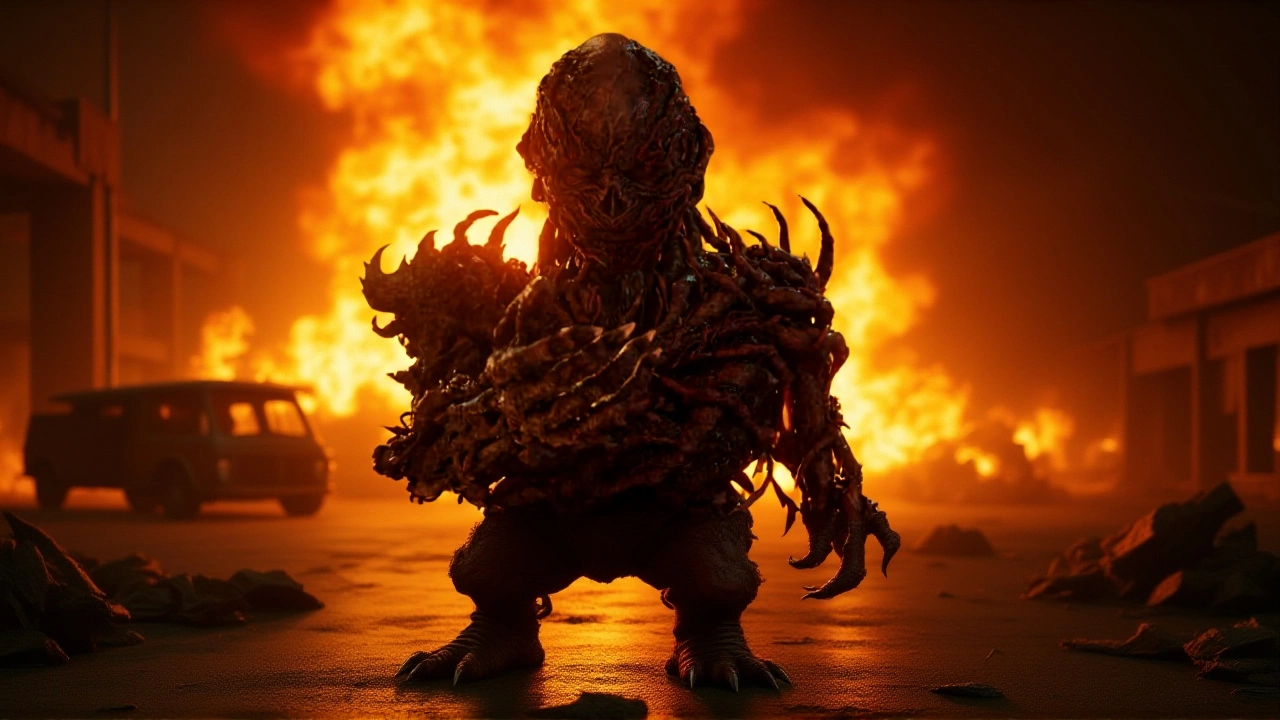
Stranger Things 5 Volume 1 Launches Epic Vecna Showdown as Final Season Begins
When Netflix Studios dropped Stranger Things 5, Volume 1 on December 12, 2024, fans didn’t just hit play—they held their breath. The first four episodes of the final season arrived like a thunderclap during the holiday season, delivering the long-awaited confrontation between the people of Hawkins, Indiana and the psychic horror Vecna, once known as Dr. Henry Creel. After nearly a decade of build-up since the show’s 2016 debut, this isn’t just another season—it’s the reckoning.
The Weight of a Decade
Stranger Things didn’t just become a hit. It became a cultural anchor. With 33 Primetime Emmy nominations and 7 wins between 2017 and 2022, and 21 Laps Entertainment’s production team—led by Shawn Levy—pushing boundaries with practical effects and period detail, the show turned nostalgia into a billion-dollar machine. By 2022, consumer products tied to the series had raked in $1.3 billion. Season 4 alone drew 1.35 billion hours of viewing in its first month. Now, with Season 5, the pressure isn’t just on the writers. It’s on the entire legacy.Volume 1 doesn’t try to reinvent the wheel. Instead, it leans hard into what made the show work: character bonds, creeping dread, and callbacks that feel earned, not lazy. The opening minutes reunite the core group—Mike Wheeler (Finn Wolfhard), Eleven (Millie Bobby Brown), Dustin Henderson (Gaten Matarazzo), Lucas Sinclair (Caleb McLaughlin), and Will Byers (Noah Schnapp)—before scattering them into parallel missions. It’s classic Stranger Things: a group torn apart, yet somehow still tethered by invisible strings.
Vecna’s Origins, Finally Explained
The biggest revelation? Vecna’s connection to the Upside Down isn’t just power—it’s grief. Volume 1 finally unpacks what Season 4 only hinted at: that Henry Creel wasn’t just a test subject at the Hawkins National Laboratory—he was its first success, and its first failure. His psychic rupture, triggered by the lab’s experiments in the late 1950s, didn’t just open a door to another dimension. It *became* the dimension. The Upside Down isn’t a parallel world. It’s the emotional echo of his pain, twisted into reality.
That’s not just lore. That’s tragedy. And it changes everything. For the first time, Vecna isn’t just a monster. He’s a mirror. And that’s why the scenes where he whispers to his victims—echoing their deepest regrets—feel so chillingly personal. The show doesn’t just explain his power. It humanizes it. And that’s what makes him scarier than ever.
Practical Magic vs. CGI Overload
Technically, Volume 1 is a mixed bag. Vecna himself? Still terrifyingly real. The makeup team, working out of Screen Gems Studios in Atlanta and on location in Jackson, Georgia, used prosthetics, animatronics, and lighting to make him feel like he’s breathing right next to you. You can see the texture of his skin. The way his fingers twitch. The way his voice rumbles—not from a synth, but from a real actor’s throat.
But the Demogorgons? They’ve lost their edge. Where Season 1’s creature felt like something crawled out of a nightmare, the newer ones look like digital renderings slapped onto a motion-capture suit. It’s jarring. Especially when you remember how, in Season 1, a simple shadow and a guttural growl were enough to terrify an entire town. The shift from practical to CGI feels less like evolution and more like compromise.
What Comes Next?
Volume 1 ends with the group regrouping—not triumphantly, but desperately. Eleven’s powers are flickering. Will’s connection to the Upside Down is growing stronger. And Vecna? He’s not just watching anymore. He’s building. The final shot of Volume 1 shows a new gate opening… not in Hawkins, but in a quiet suburban neighborhood outside Chicago. The map is expanding. The stakes just got higher.
Volume 2 and Volume 3 are slated for 2025, but don’t expect a tidy ending. This isn’t a fairy tale. It’s a war. And the Duffer Brothers have spent ten years making sure we care about every single person caught in the crossfire.
The Legacy of Hawkins
What makes Stranger Things endure isn’t the monsters. It’s the kids who fought them. The parents who never gave up. The teachers who stayed late. The friends who showed up—even when they were scared. Volume 1 doesn’t just set up the finale. It honors the journey.
When Eddie Munson died in Season 4, fans wept. Not because he was a hero. But because he was real. And now, as the final season unfolds, we’re not just watching a show end. We’re saying goodbye to a world that taught us that love, loyalty, and a well-placed walkie-talkie can beat even the darkest dimensions.
Frequently Asked Questions
Why is Vecna’s origin so important to Season 5?
Vecna’s origin as Henry Creel, the first psychic test subject at Hawkins National Laboratory, transforms him from a generic villain into a tragic figure whose pain birthed the Upside Down. This isn’t just backstory—it’s the key to understanding why the dimension reacts to emotion, and why Eleven’s powers might be the only thing that can undo it. The show ties his creation directly to the lab’s 1955 experiments, making the horror deeply rooted in real-world government overreach.
How does Season 5 compare to previous seasons in terms of production value?
Season 5 maintains the high production standards of its predecessors, with practical effects still dominating key scenes—especially Vecna’s design. However, the Demogorgons’ shift to CGI marks a noticeable downgrade in realism. Season 4 cost roughly $30 million per episode, and while Season 5’s budget is unconfirmed, the increased reliance on digital effects suggests cost pressures may be influencing the visual tone.
Where was Stranger Things 5 filmed?
Principal filming took place at Screen Gems Studios in Atlanta, Georgia, with exterior scenes shot in Jackson, Georgia, which stands in for Hawkins. This has been the show’s primary filming location since Season 1, helping maintain visual consistency across all seasons. The choice of Georgia also benefits from state tax incentives for production.
What’s the significance of the new gate opening near Chicago?
The gate near Chicago signals that Vecna’s influence is no longer confined to Hawkins. This expands the threat from a localized nightmare to a national crisis, suggesting the Upside Down is spreading through emotional trauma—echoing the show’s theme that pain is contagious. It also opens the door for new characters and storylines in Volume 3, potentially tying into real-world government responses to unexplained phenomena.
Is there any chance Season 5 won’t end the story?
While Netflix and the Duffer Brothers have repeatedly called Season 5 the final season, the show’s massive cultural footprint makes spin-offs likely. A prequel about Hawkins National Lab or a follow-up centered on the next generation of kids in a post-Upside Down world is almost inevitable. But the core story—Eleven, Mike, Dustin, Will, and Lucas—will conclude here. The ending is meant to be final.
Why does the review mention Spielberg and Stephen King?
The comparison highlights the show’s dual DNA: Spielberg’s child-centered wonder and sense of awe, mixed with King’s psychological horror and small-town dread. Volume 1 leans into both—moments of quiet family bonding are interrupted by bursts of surreal terror. That balance is what made the early seasons iconic, and Season 5’s opening tries to recapture it before the final act descends into pure spectacle.

About Author